

Hey there! As a supplier of Bubble Wrap Machine Roll, I often get asked about what goes into making these rolls. So, I thought I'd break it down for you in this blog post.

Let's start with the basics. A Bubble Wrap Machine Roll is essentially made up of a few key chemical components, and the main one is polyethylene. Polyethylene is a type of plastic that's super common in all sorts of packaging materials. It's made from the polymerization of ethylene, which is a simple hydrocarbon gas.
There are different types of polyethylene used in bubble wrap. The most common one is low - density polyethylene (LDPE). LDPE is great for bubble wrap because it's flexible, transparent, and has good impact resistance. It can easily form the bubbles that we all know and love in bubble wrap. The reason it's so flexible is due to its molecular structure. LDPE has a lot of branching in its polymer chains, which means the chains can slide past each other more easily, giving it that soft and bendy quality.
High - density polyethylene (HDPE) might also be used in some cases, usually in combination with LDPE. HDPE has a more linear molecular structure with less branching. This makes it stronger and more rigid compared to LDPE. It can add some extra durability to the bubble wrap, especially if the product needs to withstand more rough handling during shipping.
Another important aspect of the chemical composition is the additives. These are substances that are added in small amounts to enhance certain properties of the bubble wrap. One common additive is an anti - oxidant. Oxidation can cause the polyethylene to break down over time, making the bubble wrap brittle and less effective. Anti - oxidants prevent this from happening by reacting with the oxygen that would otherwise attack the polymer chains.
UV stabilizers are also often added. If the bubble wrap is going to be exposed to sunlight during storage or shipping, the UV rays can damage the polyethylene. UV stabilizers absorb the UV radiation and prevent it from causing degradation of the plastic.
Anti - static agents are yet another type of additive. When bubble wrap is used in packaging, it can generate static electricity, which might attract dust or cause problems with sensitive electronic components. Anti - static agents reduce the build - up of static charge on the surface of the bubble wrap.
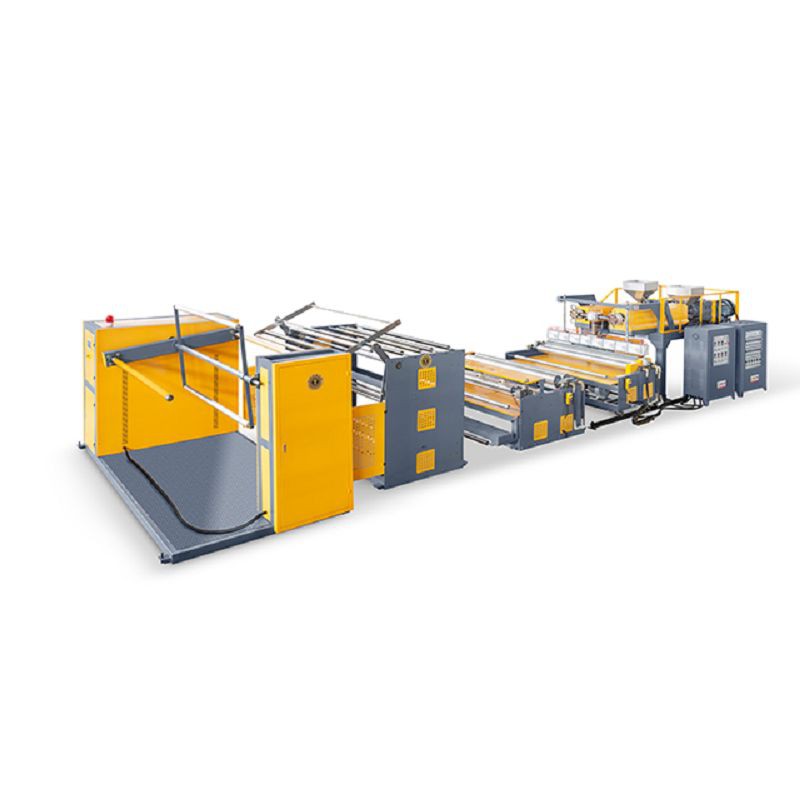
Now, let's talk about how these materials come together to form the Bubble Wrap Machine Roll. The process starts with the raw materials, the polyethylene resins and the additives, being fed into a Bubble Film Machine Bubble Film Machine. This machine heats the materials until they melt and then extrudes them through a die to form a thin film.
During the extrusion process, air is injected into the molten plastic to create the bubbles. The size and shape of the bubbles can be controlled by adjusting the settings on the machine. After the film with bubbles is formed, it's cooled and wound onto a roll, creating the Bubble Wrap Machine Roll Bubble Wrap Machine Roll.
There are also Portable Air Bubble Packaging Filling Machines Portable Air Bubble Packaging Filling Machine that can be used on - site to fill the bubble wrap with air just before it's used for packaging. This is great for businesses that want to save space by storing the flat, unfilled bubble wrap and then inflating it as needed.
The chemical composition of the Bubble Wrap Machine Roll is carefully designed to provide the best protection for your products. The flexibility of the polyethylene allows it to conform to the shape of the item being packaged, while the bubbles act as a cushion to absorb shocks and impacts. The additives ensure that the bubble wrap remains in good condition over time, even under different environmental conditions.
If you're in the market for high - quality Bubble Wrap Machine Rolls, you've come to the right place. We take pride in offering products that are made with the right chemical composition to meet your packaging needs. Whether you're shipping small, delicate items or large, heavy products, our bubble wrap can provide the protection you need.
If you're interested in learning more about our Bubble Wrap Machine Rolls or want to discuss your specific packaging requirements, don't hesitate to reach out. We're always happy to have a chat and help you find the best solution for your business. Let's work together to ensure your products are well - protected during transit.
References:
- "Plastics: Materials and Processing" by Donald R. Paul and Charles A. Han
- "Polymer Science and Technology" by Joel R. Fried


